History of Purgatory Chasm
Ice, tourists, odd names and a sale to the state.
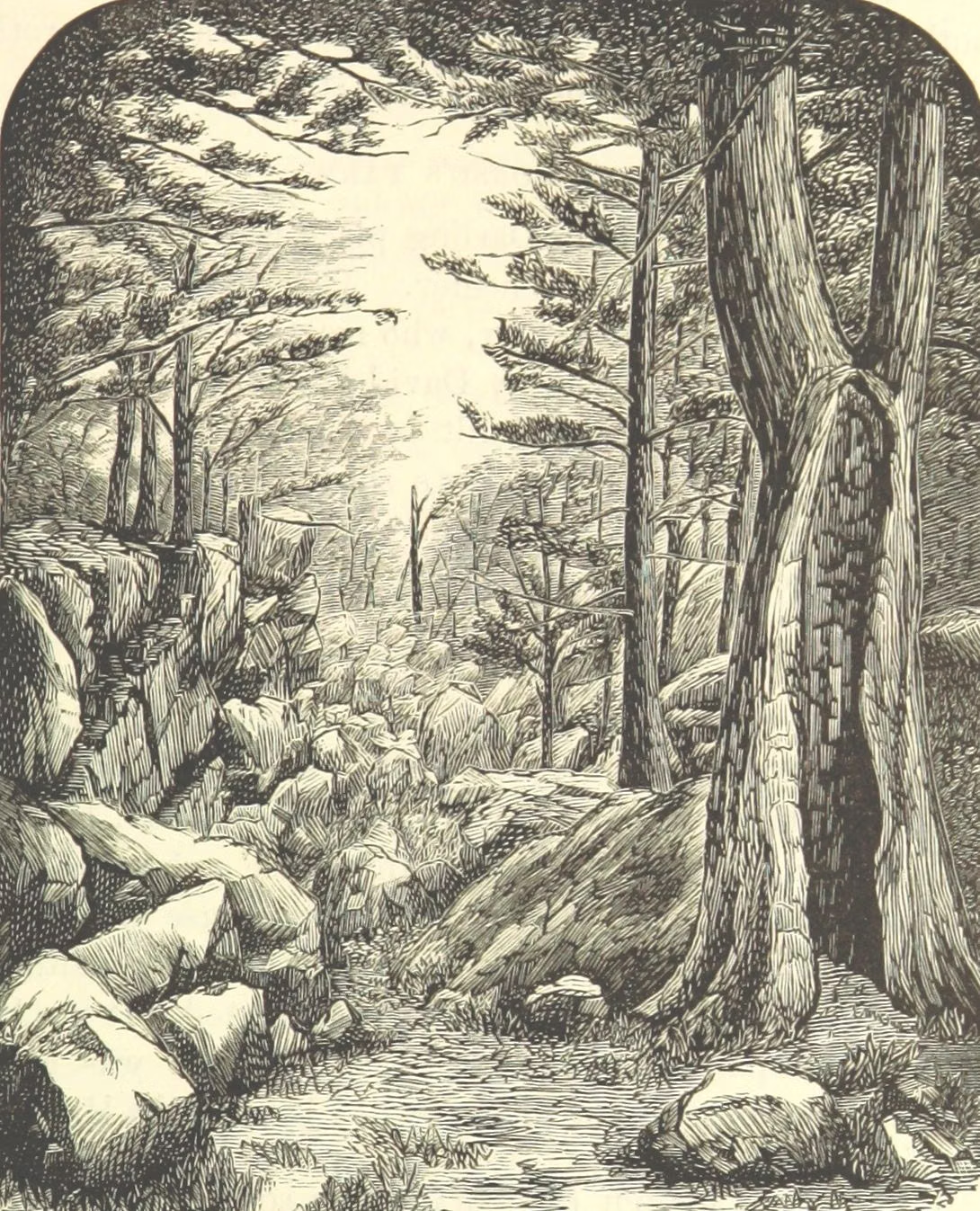
Purgatory Chasm is a boulder-filled cleft in the rock of Sutton, Massachusetts, in a park that DCR says glacial ice covered more than 10,000 years ago, and a tourist attraction since the 1800s. It became a state park after Herbert Ray, one of its first commissioners, persuaded the Whitin Machine Works to sell the land to the Commonwealth, according to DCR. The fanciful names on its rocks, from the Devil's Pulpit to Fat Man's Misery, date mostly from the 19th century, when they were coined to draw visitors.
History at a Glance
How the Chasm Formed
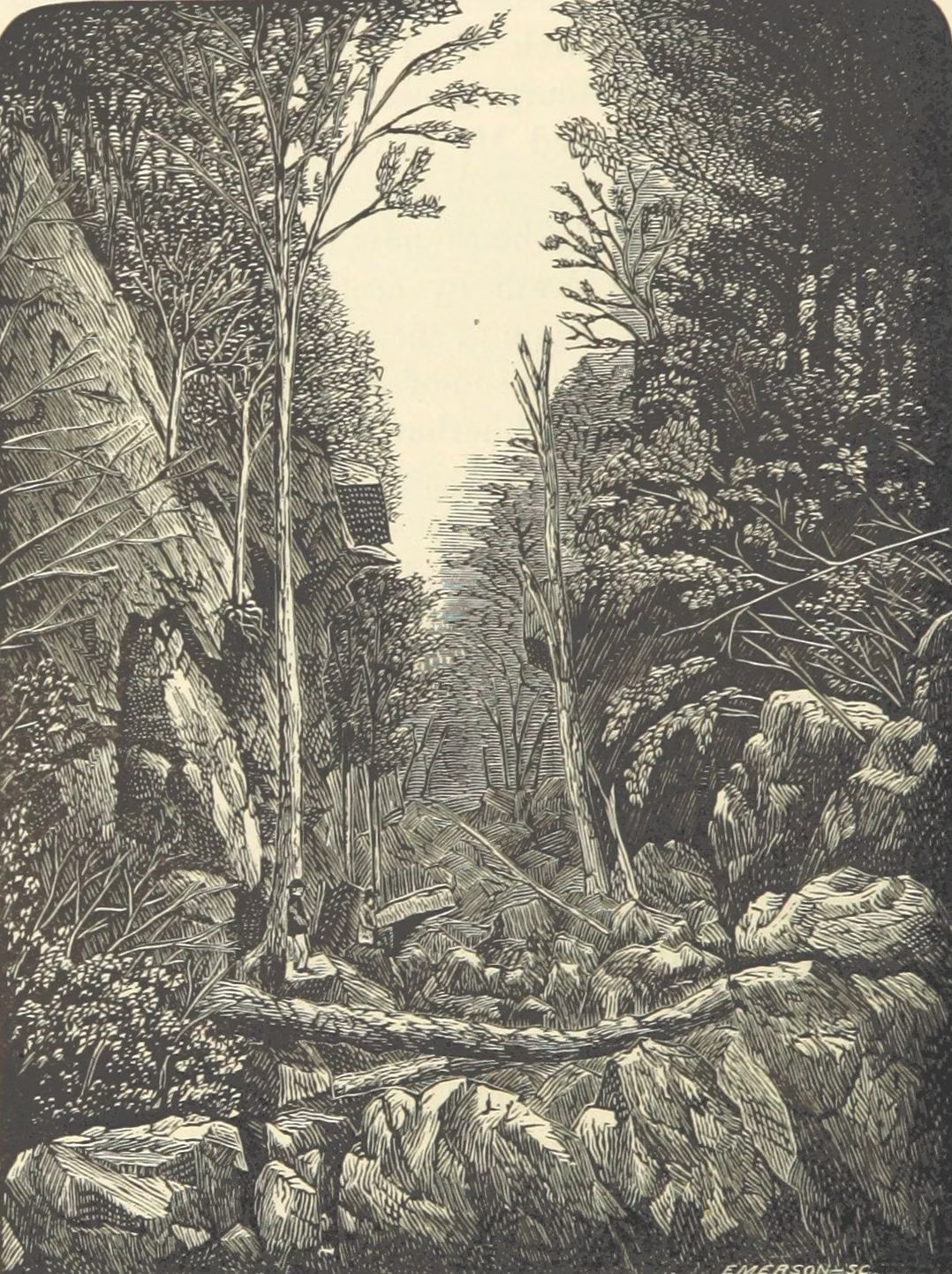
DCR ties the chasm to the last ice age. Its Glacial Geology Hike looks for evidence of the ice that blanketed the park more than 10,000 years ago, and its self-guided tour points to the Glacier Chair, a smooth, couch-shaped rock whose surface shows a glacier passed over it. Yankee Magazine's NewEngland.com reports that geologists explain the chasm itself as the work of a sudden release of dammed-up glacial water some 14,000 years ago, which carved out the chasm and left its walls intact.
The fallen blocks that fill the chasm floor make the caves. DCR calls the Devil's Coffin a talus cave, the kind of space that forms when large stones come to rest on top of each other. See the rock formations page for each one.
Where the Names Come From
DCR's self-guided tour says many of the chasm's creative names were coined in the 19th century as a way to attract tourists. That explains the run of devilish names, the Devil's Pulpit, the Devil's Coffin and the Devil's Corn Crib, and the more playful ones like Fat Man's Misery and His Majesty's Cave. Even DCR admits the origin of some names is lost.
A 19th-Century Tourist Stop
By the 1800s Purgatory Chasm was a destination for family outings. DCR says many of its rock names were invented then to attract tourists. The Devil's Pulpit was a favorite place to give a speech, with the chasm as an amphitheater. Fat Man's Misery was a popular place in the park's early days. Someone carved "Prepare to meet thy god" into the rock at the Devil's Coffin more than a century ago, and the words are still there.
Not every story is light. In 1876, Ellen Prentice, visiting with her husband George after a picnic, fell from the rim at what is now called Lover's Leap. DCR's tour quotes the Boston Globe's account and records it as the chasm's first known fatality.
Becoming a State Park
DCR's self-guided hike begins at a bronze dedication plaque just inside the chasm. The plaque gives the year Purgatory Chasm became a state park and the names of its first three commissioners, including Herbert Ray. According to DCR, Ray saw the chasm's potential as a place for recreation and persuaded its owner, the Whitin Machine Works, to sell it to the Commonwealth. Read the plaque when you visit; it is the first stop on the tour.
The Hurricane of 1938 and Later Changes
DCR's tour sheet illustrates the chasm with postcards it labels as from "before the Hurricane of '38." A more recent change came in 1994, when the upright stone of the Devil's Pulpit tipped over. Today the park has a visitors center, a playground and picnic areas, and DCR's Time Traveler Tour walks among the historic structures that remain.
The Park Today
The Massachusetts Department of Conservation and Recreation runs Purgatory Chasm State Reservation and includes it in its free Blackstone River Valley hike series, alongside seasonal guided hikes and family programs at the chasm itself. For a visit, start with plan your visit, and for the pictures, see historic photos and postcards.
History FAQ
How was Purgatory Chasm formed?
By glacial forces. DCR dates the ice that covered the park to more than 10,000 years ago, and geologists quoted by Yankee Magazine's NewEngland.com explain the chasm as the work of a sudden release of dammed-up glacial water about 14,000 years ago.
Why is it called Purgatory Chasm?
DCR says the park's colorful names were coined in the 19th century to attract tourists. DCR says even it doesn't know the origin of some of them.
Who owned Purgatory Chasm before the state?
The Whitin Machine Works. DCR says Herbert Ray, one of the park's first commissioners, persuaded the company to sell the chasm to the Commonwealth.